Physician-researcher · Cardiovascular imaging and clinical AI

Pooya Eini, MD

I develop and appraise machine learning models for diagnosis and prognosis across the cardiovascular system, from ventricular mechanics to plaque biology, with particular attention to calibration, external validation, and clinical utility.

  • 300+Citations
  • 10+h-index
  • 14i10-index
  • 65+Articles

Google Scholar metrics, updated September 2026

00Profile
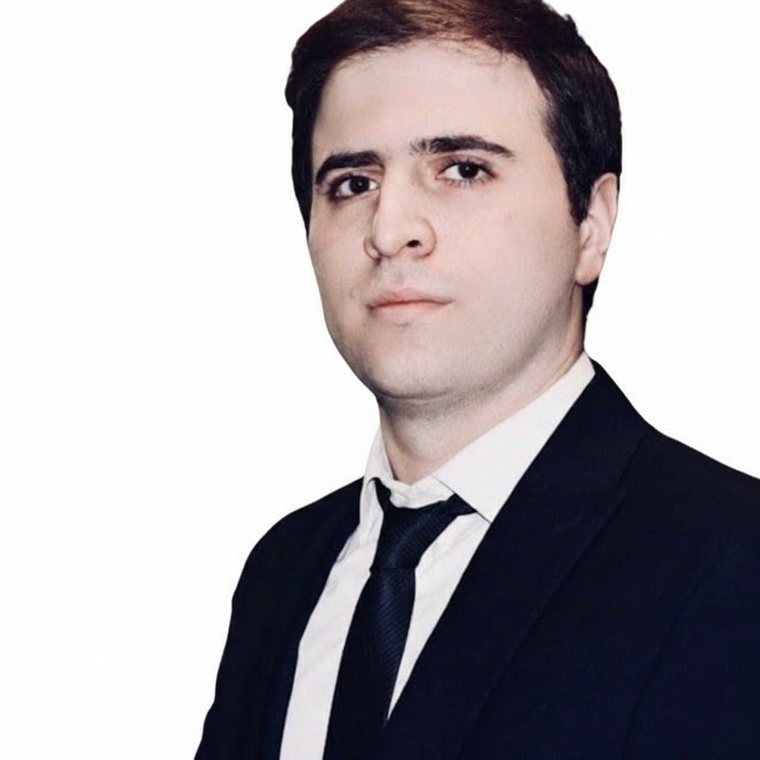
Portrait of Pooya Eini, MD

About

I am a physician-researcher whose work centers on cardiovascular medicine, cardiac imaging, and clinical artificial intelligence. My focus is machine learning for diagnostic and prognostic modeling, particularly in echocardiography, ultrasound-based vascular assessment, multimodal clinical prediction, and risk stratification.

Most of my output is evidence synthesis. I lead systematic reviews and meta-analyses that ask whether published algorithms are accurate, well calibrated, externally validated, and genuinely useful at the bedside.

Currently
Clinical Researcher, Shaheed Rajaie Cardiovascular Medical and Research Center
Degree
Doctor of Medicine, Shahid Beheshti University of Medical Sciences
Service
Editorial Review Board, Sage Open
Based in
Tehran and Hamedan, Iran

This site is organized by anatomical scale. Each chapter of the journey below holds the work whose clinical question lives at that scale, from chamber and valve to the endothelium itself.

0110−1 m · Organ

The heart

Imaging intelligence for chamber and valve

Echocardiography, cardiac magnetic resonance, and cardiac CT produce quantitative signals that are rich yet operator dependent. My work synthesizes the evidence for automated assessment of right ventricular function and valvular regurgitation, and for models that anticipate atrial fibrillation and heart failure before they declare themselves clinically. In original work, I develop explainable models that phenotype mitral valve prolapse and read cardiovascular diagnoses from pediatric electrocardiograms.

  • Right ventricular function
  • Mitral regurgitation
  • Tricuspid regurgitation
  • Postoperative atrial fibrillation
  • Heart failure risk
  • Cardiac MRI
  • Mitral valve prolapse phenotyping
  • Pediatric ECG

Work at this scale

    0210−2 m · Conduit arteries

    The great vessels

    Aorta, carotid bifurcation, and cerebrovascular risk

    Conduit arteries fail catastrophically, yet rarely without warning. I study machine learning for detecting and characterizing carotid plaque on ultrasound, for predicting stroke in hypertensive populations, and for diagnosing acute aortic dissection, together with the circulating microRNA signatures that may identify abdominal aortic aneurysm before rupture.

    • Carotid plaque
    • Stroke prediction
    • Aortic dissection
    • Abdominal aortic aneurysm
    • Vascular ultrasound

    Work at this scale

      0310−4 m · Arterioles and capillaries

      Pulmonary microcirculation

      Embolism, venous thrombosis, and alveolar flooding

      At the alveolar capillary interface, obstruction and congestion decide survival. Oxygenated blood (red) crosses the capillary bed and returns desaturated (blue); an embolus silences everything downstream, and failing hemodynamics flood the air spaces. I have evaluated machine learning for mortality prediction in acute pulmonary embolism, for detecting embolism in patients with pneumonia, for recurrence after venous thromboembolism, and for automated detection of pulmonary edema.

      • Pulmonary embolism
      • Recurrent VTE
      • Pulmonary edema
      • Risk stratification

      Work at this scale

        0410−5 m · Blood and endothelium

        Inside the lumen

        Method: every cell is a data point

        Blood carries the signal; methodology decides whether it is read correctly. Across this body of work, algorithms are judged on discrimination, calibration, and validation rather than headline accuracy, and pooled estimates are only as credible as the studies beneath them.

        Core methods

        • Evidence synthesisSystematic review and meta-analysis, including diagnostic test accuracy and prediction model performance synthesis.
        • Prediction modelingDiscrimination, calibration, internal and external validation, and head-to-head model comparison.
        • AppraisalProtocol development, literature searching, data extraction, and critical appraisal of study quality.
        • Imaging AIEchocardiography and vascular ultrasound, with applications in cardiac CT and CMR.
        • StatisticsStatistical analysis and reproducible research workflows in R.
        • WritingManuscript preparation for cardiovascular, radiology, and thrombosis journals.
        0510−5 m · Vessel wall

        Atherosclerosis

        From fatty streak to flow-limiting plaque

        Atherosclerosis begins when apolipoprotein B containing lipoproteins are retained in the intima. Recruited monocytes engulf oxidized lipid and become foam cells, and the lesion matures into a fibroatheroma whose fibrous cap either stabilizes or thins. Notice how red cells accelerate through the stenosis. My work examines how artificial intelligence reads plaque on intravascular ultrasound, how coronary CT angiography grades left main stenosis against IVUS, and how immune activation accelerates atherogenesis.

        • Intravascular ultrasound
        • Coronary CT angiography
        • Left main disease
        • Carotid plaque
        • Inflammation

        Work at this scale

          0610−6 m · Plaque rupture

          Rupture and thrombosis

          The final common pathway

          When a thin fibrous cap ruptures, tissue factor within the necrotic core meets flowing blood. Platelets adhere and aggregate, fibrin polymerizes into a mesh, and erythrocytes are trapped within it. The same biology underlies myocardial infarction, ischemic stroke, and venous thromboembolism, the events that my prognostic work seeks to anticipate.

          Disease atlas

          Conditions studied across the journey. Select one to open the matching evidence.

            07

            Evidence index

            Cardiovascular publications grouped by territory, each linked to its DOI. The complete record of more than 65 articles, including co-authored work in oncology, neurosurgery, endocrinology, and toxicology, is on Google Scholar.

              Accepted and in press

                08

                Experience and education

                Research

                1. 2025 to presentClinical ResearcherShaheed Rajaie Cardiovascular Medical and Research Center, Tehran
                2. 2023 to presentClinical ResearcherInfectious Disease Research Center, Hamadan University of Medical Sciences

                Editorial service

                1. 2026 to presentEditorial Review BoardSage Open

                Collaborative projects

                1. Multinational · 30+ centersEACVI-MMVDEuropean Association of Cardiovascular Imaging Multiple and Mixed Valvular Disease Study. Collaborator contributing to multicenter data collection for the standardized evaluation of multiple and mixed valvular heart disease.
                2. Open sourceDataTypeHubProject Pars Peace. Contributed to data gathering for a centralized resource on medical data modalities and data workflow best practices.

                Education

                1. 2017 to 2024Doctor of Medicine (MD)Shahid Beheshti University of Medical Sciences, Tehran

                Selected training

                • Linear Regression in R for Public HealthImperial College London
                • Introduction to Statistics and Data Analysis in Public HealthImperial College London
                • Computing for Cancer InformaticsJohns Hopkins University
                • Cancer BiologyJohns Hopkins University
                • Introduction to Breast CancerYale University
                • Immunology: The Immune System and Its FailuresImperial College London
                09

                Let’s connect

                Open to research collaboration, co-authorship, and discussion on cardiac imaging and clinical AI.

                Download CV